Wednesday Wander – San Sebastian Beaches

It’s Wednesday and time for my weekly wander. This week we’re heading to Donostia San Sebastian, in the Basque country region of Spain. Donostia is the Basque name for the city, and is another way of saying San Sebastian – in honour of the dual heritage of the city, both names are used.

I visited earlier this year and fell under its spell straight away. The gorgeous old buildings and curving golden beaches were like a scene from a story – it was hard to believe people were lucky enough to live in such a place.

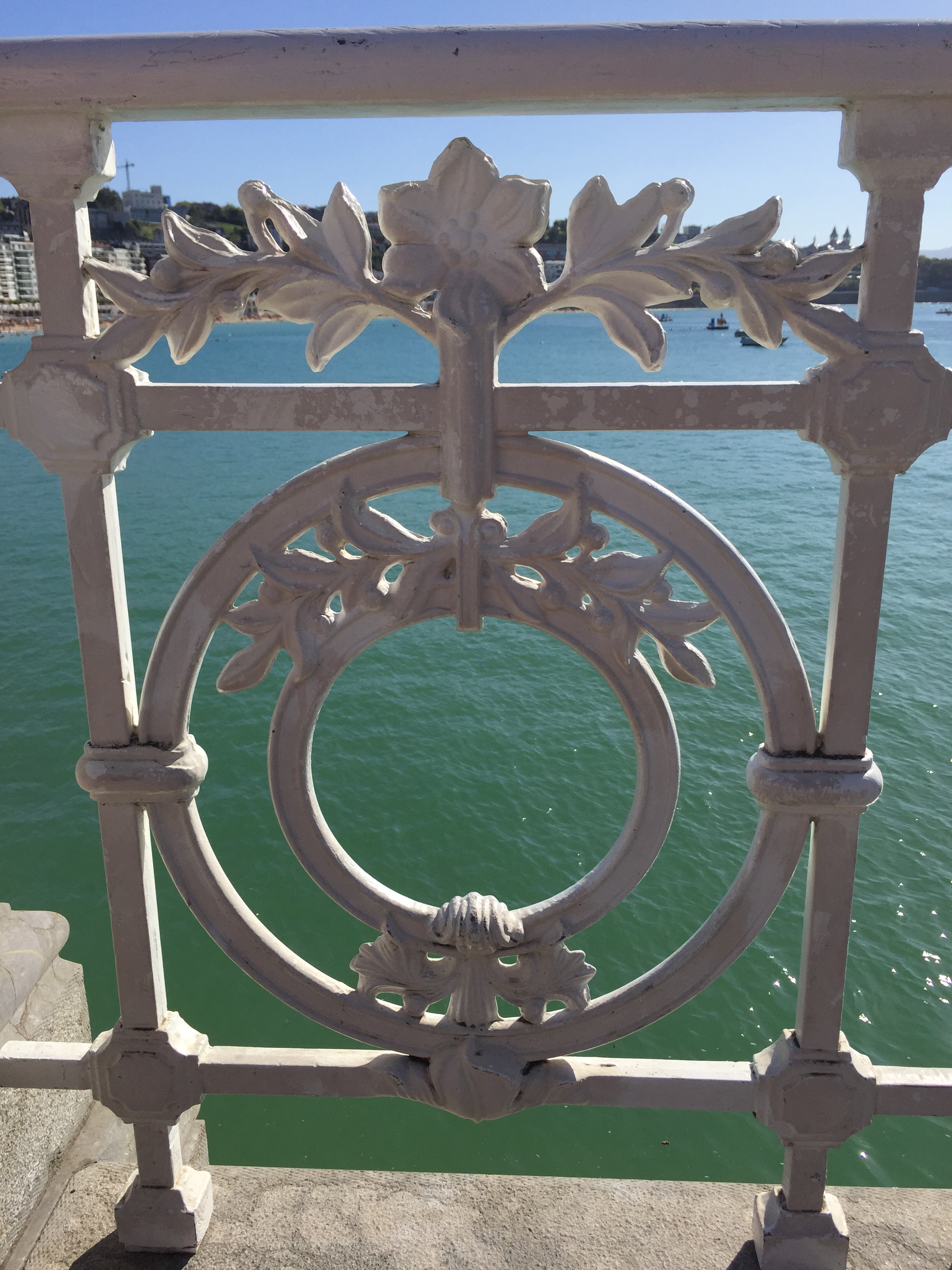
This is the iconic La Concha beach, the best known of the city’s beaches, voted the second best city beach in the world by Travel and Leisure magazine. A well- deserved award, I think. As you can see, it’s pretty popular – the clear green waves and golden sand make it a wonderful spot to lounge and take photographs during the day.

At night the beach changes, the deckchairs folded away, the entrance to the bay a perfect frame for glorious sunsets.
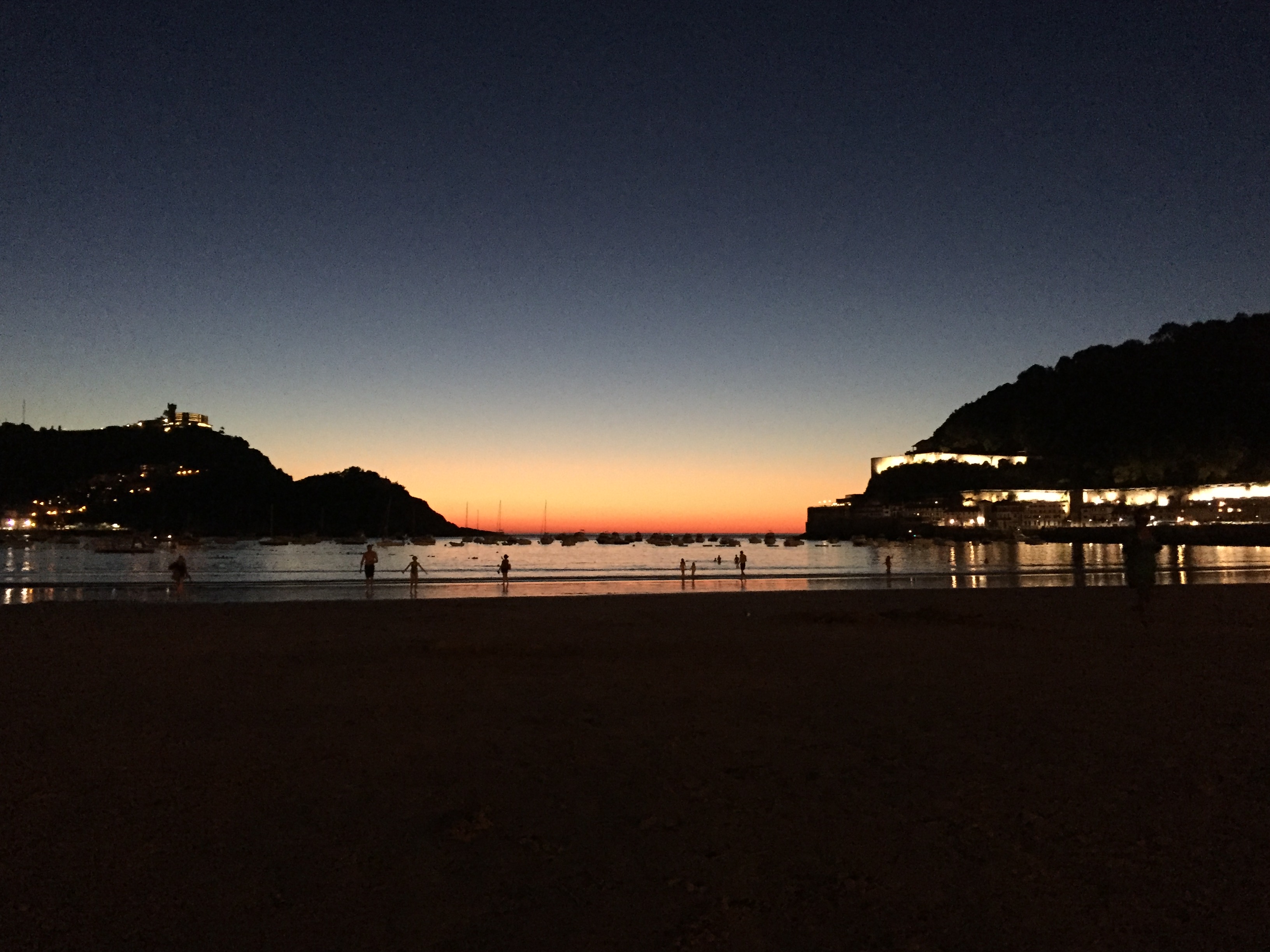
I sat for a half hour or so on the cool sand, watching the light change across the water, gold to red to violet, hardly able to take in such beauty.  Dark silhouettes danced at the water’s edge, the illuminated statue of Jesus on Monte Urgull seeming to watch over it all.

Day and night, the ornate promenade was full of people, families and couples and young people, all walking, laughing, enjoying the view. There are several small restaurants built into the seawall itself – one of them made excellent pizza, and was a fantastic place to watch the waves and people passing by.
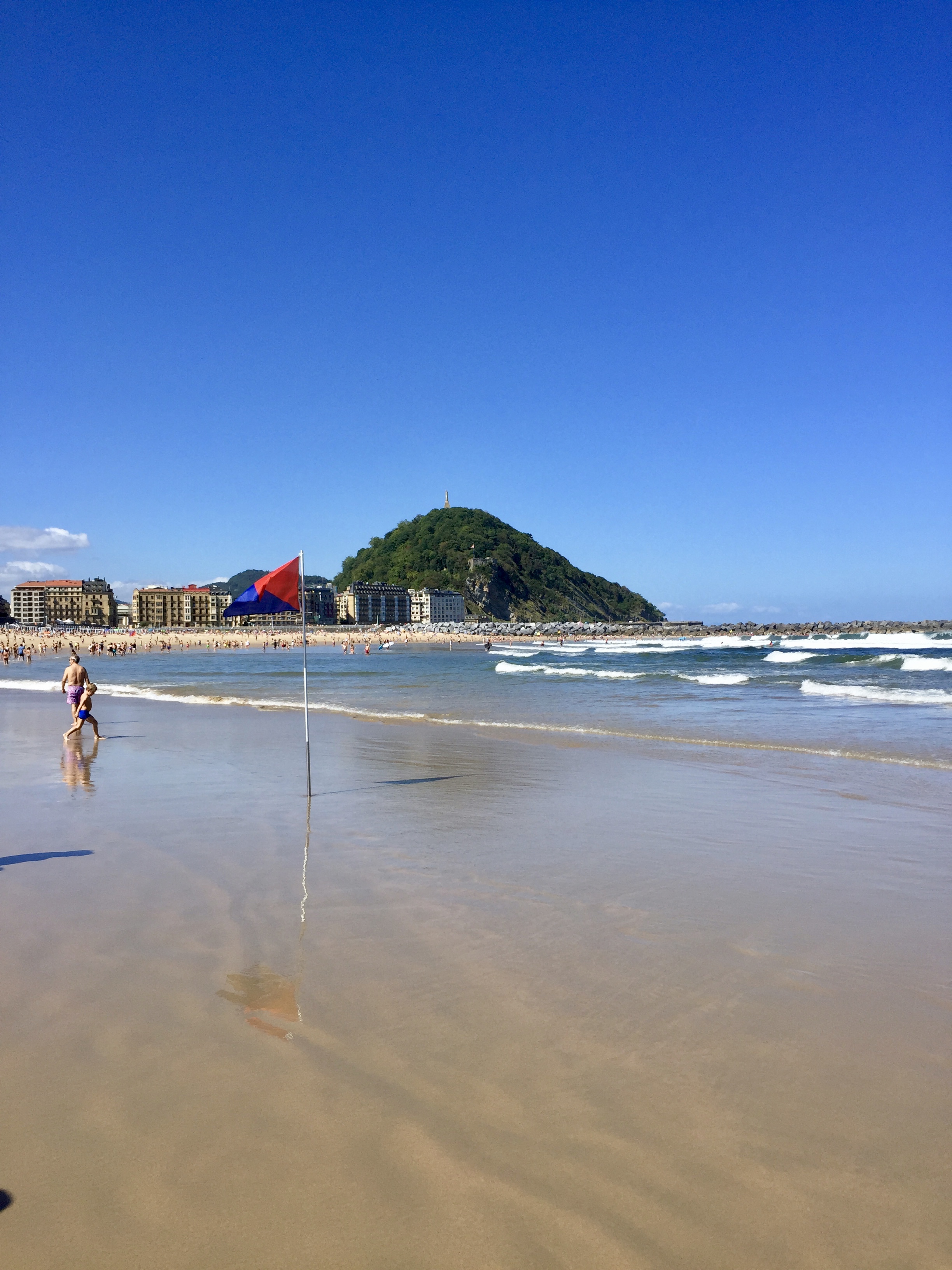
Another city beach in San Sebastian is Zurriola, which is on the other side of Monte Urgull. This beach is wilder, the waves popular with surfers, although it is safe for swimming in parts, the Spanish lifeguards using a flag system similar to that we were used to in Australia. We visited La Zurriola most days – it was less crowded, yet easy to get to with ample parking nearby. I actually got dumped by a wave the first day there, scraping my knee – haven’t done that in years! Oh, and apparently, Zurriola is also somewhere you can hang ten in the buff, should you choose to – one of several beaches in Europe which allow nude surfing! Just remember to apply plenty of sunscreen 😉
When I began writing this Wander, I’d thought I would write a single post about San Sebastian. But, when I began writing about the beaches, they seemed to merit a post of their own. It seems certain that I’ll be wandering back to San Sebastian, both on this blog and (I hope) in real life too.

Thanks for coming on another Wednesday Wander with me! See you next time 🙂


If you enjoyed this post and would like to read more, you can find me on Twitter @AuthorHelenJFacebook, Instagram and Pinterest. Plus my latest book release, A Thousand Rooms, is now available on Amazon. Visit my Amazon Author Page to see more.
Maiden Mother Crone, Part 6 – Rain to Bow

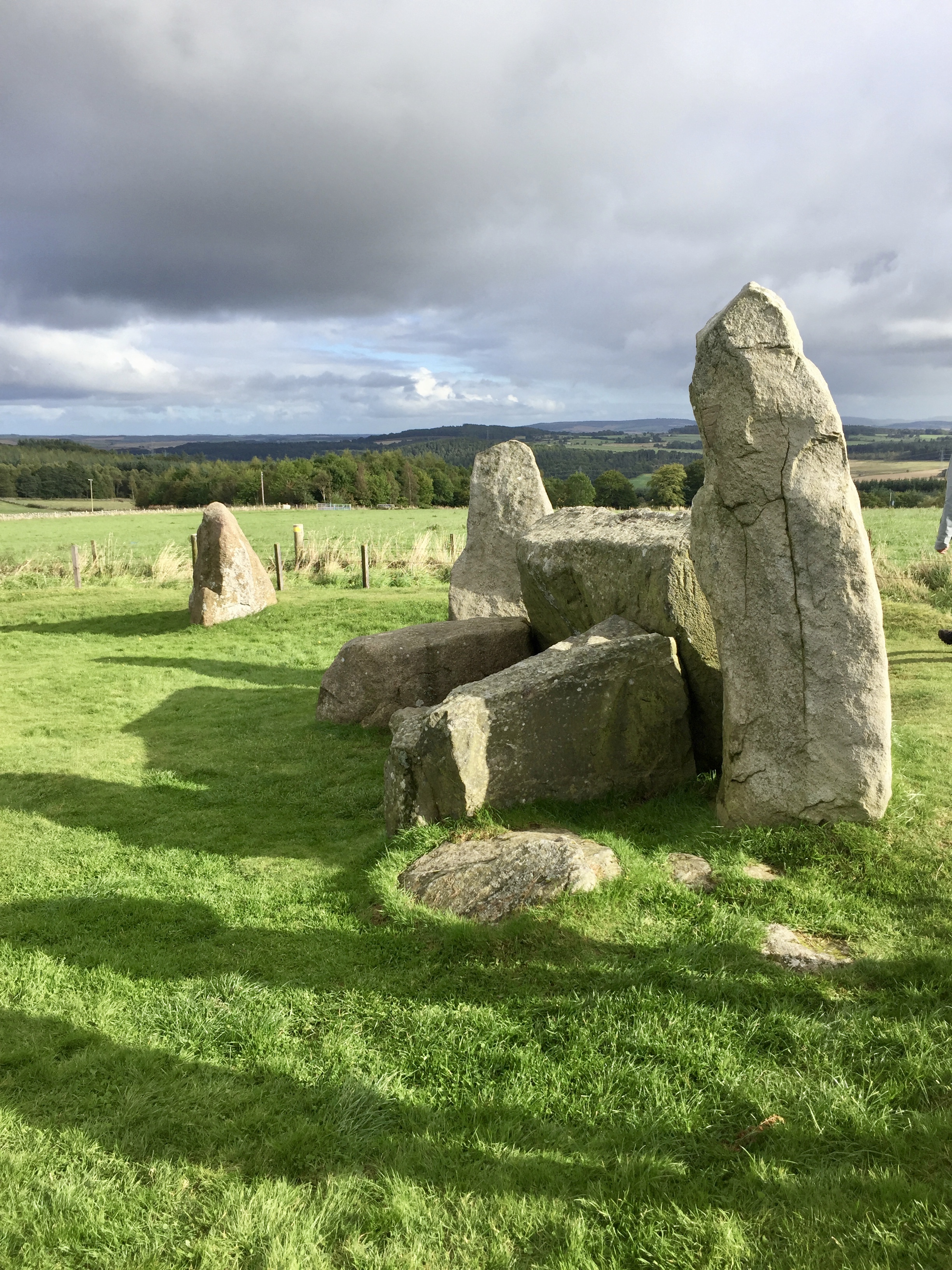
Along winding roads through green fields, the purpling hills beyond, we travelled back to where our journey began – Easter Aquhorthies. We returned to a circle transformed from the screaming wind and rain of the previous day – this time, the sun drew shadows from the stones, the distant peak of Mither Tap clear against patches of blue sky. There was still rain around, but none really came to trouble us as we once more found our stones and learned more about their alignments.

‘My’ stone was warm, welcoming again, and I gave it a gift, something I’d been carrying with me, looking for the right place to leave it. It seemed to have been accepted. I learned that ‘my’ stone aligned with the winter solstice sunset, and also with the viewing platform we could see through the trees… which also lined up with the circle and carved stone in the housing estate beyond. Truly, the people who created these monuments worked on a large scale and with great accuracy, the alignments of sun and moon and land precise to the decimal point.

Another group came through to the circle, four people, and we could hear them talking amongst themselves, wondering what we were all doing. A joke was made about practising for the sacrifice later, and that we only needed four willing victims. They laughed, but didn’t stay too much longer – we were just joking, honestly!

One of the interesting features of the circle is the two smaller stones sitting against the huge recumbent. They are angled out slightly, almost like welcoming arms and, we discovered that, if you sit down between them, your voice will carry throughout the circle, even through howling wind. However, stand tall and it is lost. And so, with the weather a little kinder, Stuart treated us all to a gentle chant, the notes rising and falling around the stones, vibrating among us all. We were invited to join in, if we chose – I did not, choosing to listen again, my eyes closing as I leaned against ‘my’ stone.

… I stood with my back to the stone and could feel the alignments, arrow straight, running through me to the left and right of the stone, making a perfect angle. The alignments behind me didn’t matter – it was only the ones that ran in front of me across the circle that were important. I could feel the curve of the circle, too, and I was reminded of the shape I saw earlier, carved into an ancient stone – the broken spear, intersecting the curve. The lines were strong, the stone at my back comforting, a gentle guide…

I opened my eyes and the sky was transformed, rainbows around us, bright against the grey clouds. After the fierceness of the previous evening, it felt like a balm, a gift and, perhaps, an acknowledgement. If the storm and rain had been a test, perhaps we had passed?

After ooh-ing and aah-ing and taking photos, we left en masse. It was getting close to dinner time and we were all feeling hungry. After a brief moment of struggle when one of our party’s vehicles became stuck in a ditch (huge thank yous to the LandRover driver who pulled them out!), we headed back to our respective hotels with a plan to meet for dinner later.

To be honest, I was tired at this point. It had been a long and intense day, from the darkness at Cullerlie to the brightness of rainbows at Easter Aquhorthies. I was cold as well – despite the rain clearing it had been windy on the hillsides. My bed beckoned… but I decided to head out once more. It wasn’t often I got to spend time with the group, and I was looking forward to catching up over another meal. However, Saturday night in Inverurie coupled with the size of our group meant dinner bookings were hard to come by – we managed eventually, to find something.

I sat next to Stuart at dinner, and he leaned over and said ‘I have something for you. It’s a book.’ I was surprised, and got the feeling there was more to it than just something new to read. He continued,’ It’s from a friend of ours, who passed away. I’ve been told I’m to give it to you.’

Another coincidence. I’d never met the woman who owned the book, but remembered reading about her on Sue’s blog, and how she’d seemed quite a wonderful character. And now I was to have something of hers. It seemed fitting, on such a weekend, when the role of women was a theme that presented itself again and again, that I was to receive this gift. I felt honoured, to be honest – it was no small thing. And, as I sat opposite another new friend and reminisced about places and people we’d both once known, living in the same town for years but never meeting until this moment, I wondered to myself about the way the Universe seems to present things, waiting until the right moment.

Some of the group decided to head back up to Easter Aquhorthies – the night was clear and it was a chance to see the stars almost as the ancients would have, out among the hills. I declined – it didn’t feel like the right thing to do. Perhaps I was tired, or perhaps I felt unready, but I did feel that I might get the chance to do so again one day. So instead I went back to my hotel to rest, ready for the last day of our adventure…

This is my account of a recent weekend spent away with The Silent Eye. Click here for Part 1, Part 2, Part 3, Part 4, and Part 5.


If you enjoyed this post and would like to read more, you can find me on Twitter @AuthorHelenJFacebook, Instagram and Pinterest. Plus my latest book release, A Thousand Rooms, is now available on Amazon. Visit my Amazon Author Page to see more.

Sacha Black – 13 Steps to Evil Workbook Launch!

My lovely author-and bloggy-friend Sacha recently released her excellent writing craft book, 13 Steps To Evil – How To Craft A Superbad Villain, which I would recommend as essential to any writer. Today, she’s released the accompanying workbook. Here, in her own words, she tells us what we’ll find inside:

How do you become the best writer you can?

Is a question I constantly ask myself in my quest to write full-time.

One of the most obvious answers I’ve discovered is by continuing to learn lessons and develop your craft.

But lessons only take you so far, right?

Why?

Because you have to put them into practice.

***

At the tail end of May, I released 13 Steps To Evil – How To Craft A Superbad Villain which was jam-packed with resources and tips to improve your villains and help you take them to the next level.

But what was missing from that book, was a way for you to put those lessons into practice. I promptly rectified that, which is why today sees me launch:

If you’d like to buy a copy of the workbook, you can find it here.

Or, if you never got round to buying the original 13 Steps, you can save yourself some money and buy the complete boxset here.

If you do purchase a copy and you have a few spare minutes, I’d really appreciate a short review on the site you bought it. Reviews are like currency for an author.

Want to know a little more about the 13 Steps To Evil Workbook?

Sacha Black’s book 13 Steps To Evil – How To Craft A Superbad Villain showed writers how to create their ultimate villain in an easy and humorous, step-by-step guide.

This workbook puts those lessons to use by building on each chapter in 13 Steps To Evil and guiding you through the development of your indisputable bad guy. It’s time to get to the core of your villain and supersize that evil.

Inside the workbook you’ll find hundreds of thought provoking questions, exercises and creativity boosting prompts. This resource will help you:

  • Choose the perfect villain traits
  • Create sinister character histories and motives
  • Avoid pesky clichés
  • Design conflict and tension that grips your reader
  • Build your market knowledge so you create a villain that sells

Craft your characters through easy to digest exercises that empower you to conquer your villain for life. Read the 13 Steps To Evil Workbook today and start creating kick-ass bad guys.

I also run a Facebook group where you can work through any villainous issues you might have with me and the others in the group. If you’d like to join the group, click here.

And in case you missed them, here are those links one more time:

Workbook
Complete boxset 

You can also find Sacha on FacebookTwitterInstagramPinterestGoodreads

Wednesday Wander – Warwick Castle

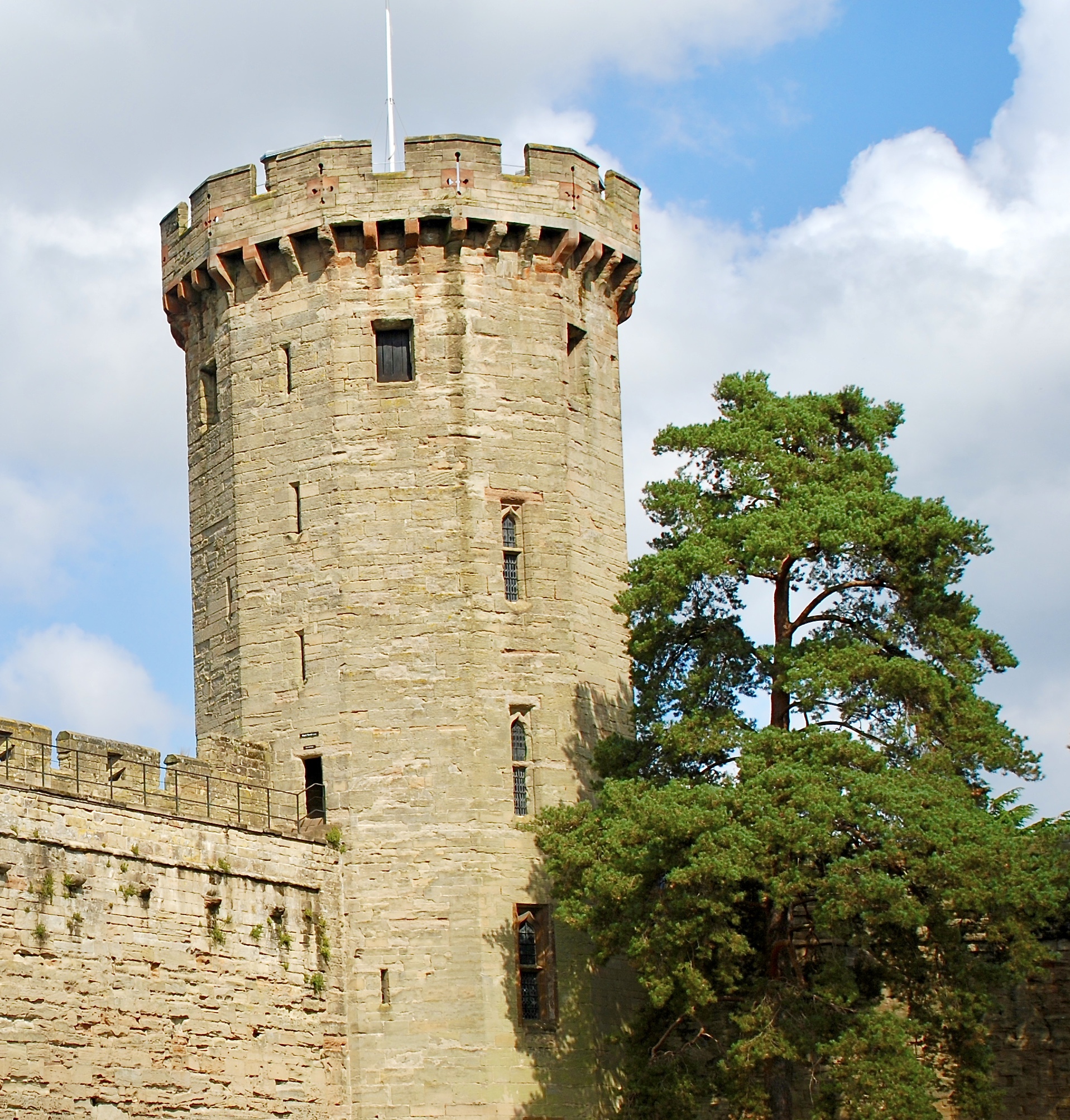
This week, I’m wandering to a view that I’ve seen many times. It’s of an ancient castle, almost a thousand years old in parts – a place steeped in legend, where kings were made and battles fought, mysteries still hiding in its thick stone walls. This is Warwick Castle.

The original castle at Warwick was built in 1068 by William the Conqueror as part of his strategy to stamp his authority on the newly conquered country. It is situated along a bend of the storied River Avon and, until 1978, was still residence of the Earls of Warwick, the legendary Kingmakers.

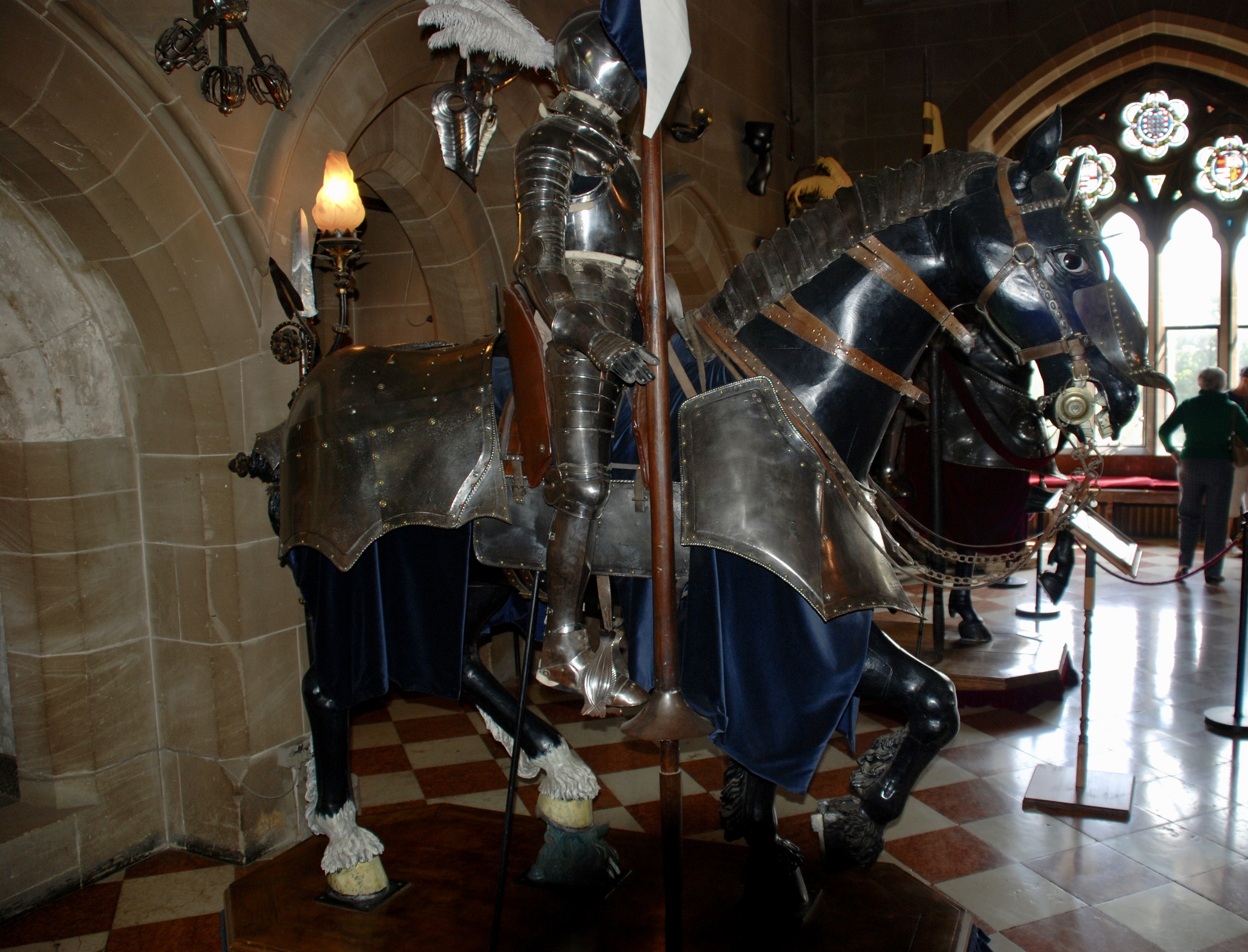
Kings, Queens and assorted nobility have all stayed within its grey walls over the centuries, including Elizabeth I, Richard III and Queen Victoria. The castle has been painted by Canaletto, among others, and its collection of arms and armour is considered second only to that in the Tower of London. Hardly surprising, considered the many and varied wars fought on behalf of kings and queens by Warwicks over the years.

The castle is also home to one of the world’s largest working trebuchets, or siege engines. Eighteen metres tall and made of oak, it can fling projectiles as far as 300 metres. I have seen it in action and it is something to behold – it takes four men running in treadmills just to lift the counterweight!

Near to the castle is a lovely park I’ve often visited. It’s home to a funfair and mini golf, as well as lovely gardens and, down by the river, there is a place to picnic and fly kites. Water lilies float serene, as do the ducks and swans, and for a moment you could be anywhere, at any time.

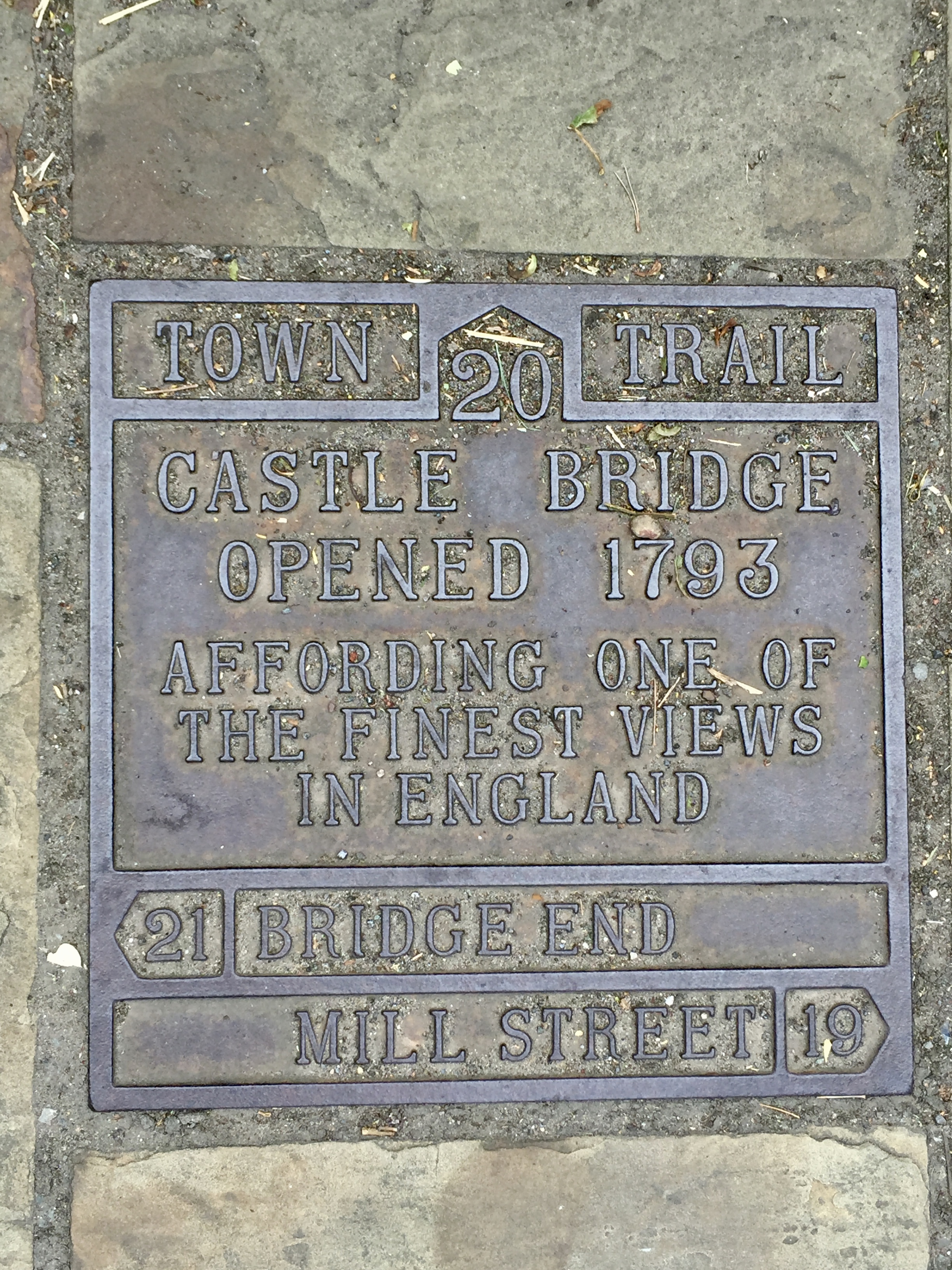
On the edge of the park is a bridge across the river, where you can pause and take in the view to the castle. Set into the pavement is this plaque. I think I would have to agree. 🙂

Thank you for coming on another Wednesday Wander with me – see you next time!


If you enjoyed this post and would like to read more, you can find me on Twitter @AuthorHelenJFacebook, Instagram and Pinterest. Plus my latest book release, A Thousand Rooms, is now available on Amazon. Visit my Amazon Author Page to see more.

Maiden Mother Crone, Part 5 – The Maiden

Stone and rain. Rain and stone. It seemed to be a theme of the weekend. No matter the weather, when we reached any stone of significance the rain would fall. From soft misty drizzle to gale force rain storms, we experienced just about all the types of rain Scotland seemed to offer, often in the space of just a couple of hours.

And so it was at our next two sites, both of which featured carved Pictish stones. I’d never seen such stones in real life before, so it was a thrill to see the first one, even though it had been reconstructed and sat in the middle of a modern housing estate. There had been a circle there, once, still marked with a ring in the grass, but it had been pulled down long ago, in days when such monuments were no longer revered, their carefully chosen stones broken for use in stone fences and buildings. Some still remained on site, said to come from the original circle, and, despite the cracks crossing the face of the carved stone, the images were still clear, a serpent and spear, thought perhaps to represent the nearby river, and a semi-circle and broken spear, the shape of which came to have more significance for me, later in the day. The rain was still falling as we got into the cars, a soft cool drizzle, dampening the stones but not our spirits, as we headed out into the landscape once more.

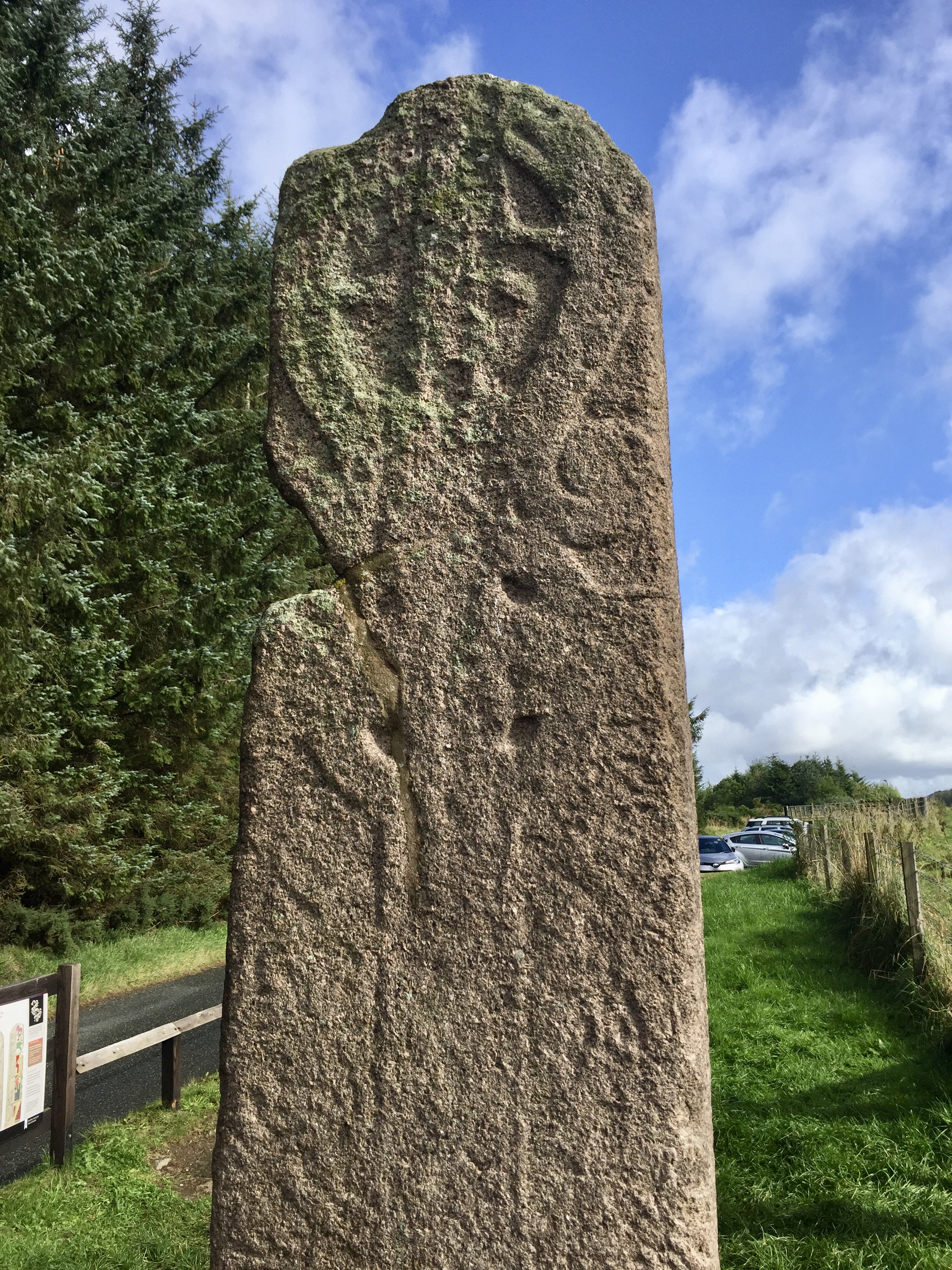
A short while later we pulled up alongside the road and saw the towering Maiden Stone. Sue has covered the legend of the Maiden Stone in her excellent post, but the short version is this: the stone is said once have been a young woman who, when tricked by the devil, ran from him. He caught her by the shoulder, creating the distinctive notch shape, and she was turned to stone forevermore.

I saw no woman in the stone, only the enigmatic carvings left on one side by the mysterious Picts, centaur and dolphin creatures, spear and shield, comb and mirror. One of the companions shared an experience he’d had at Easter Aquhorthies, which shed some light on the significance of the comb and mirror. It involved the moon and the role of priestess, a theme we encountered again and again over the weekend. It is not my story to share, but all of us felt it to be valid. In fact, that was one of the lovely things about the group, and something I’d also encountered on my last weekend away with them – that such experiences, thoughts and ideas could be shared freely and taken seriously, with no fear. I can appreciate that, to some, the things I ‘see’ when I’m on these weekends (and at other times too), can seem a bit out there, a bit like the imaginings of an overwrought author. And there are times when I think that as well. So, when you can share these ideas with others and have them corroborated, there is a validation there, a growth in trusting yourself and your intuition, that is a real joy.

Christian imagery had been carved on the other side of the stone, though the carvings were far more weathered than the earlier Pictish work. An intricate cross and wheel, as well as a figure supposed to be Jesus holding two ‘sea-monsters’. Carving continued along the edges of the stone, criss-cross diamond shapes it was said could represent energy patterns, and more intricate knotwork.

The setting itself was beautiful – next to a curving road, the land rising to one side of the stone, a tall row of pines the other side. I imagine when it was new the stone would have stood out in the landscape, its size and the bright colours that once decorated it making it visible for miles around. The symbols themselves are a mystery – the Picts left no explanation as to why they carved the images they did, but they appear over and over again. Theories range from clan markings to maps to storytelling, but it is all conjecture.

We stood around the stone, each of us taking photographs, sharing our thoughts about what we could see and feel. There was a wonderful sense of age to the site, of something that had been standing since long before we were born, and would continue to do so for centuries to come. But we couldn’t stay for too much longer – it was heading into the afternoon and we still had another site to visit, a site that had tested us the last time we were there. What would it hold for us this time?

This is my account of my recent weekend away with The Silent Eye in Scotland. Click to read Part 1, Part 2, Part 3 and Part 4.


If you enjoyed this post and would like to read more, you can find me on Twitter @AuthorHelenJFacebook, Instagram and Pinterest. Plus my latest book release, A Thousand Rooms, is now available on Amazon. Visit my Amazon Author Page to see more.

#Flash4Storms – Arrow In the Bow

Sarah Brentyn of Lemon Shark is running a Flash Fiction Challenge to aid victims of the recent hurricanes in the US. The challenge is to write a 50 word piece of flash fiction on the theme ‘Help’, and share it in a post, with the hashtag #Flash4Storms in the title. Sarah will donate $1 for every piece of flash fiction posted, to a maximum of $50. Here’s my attempt:

She stood at the edge, looking down. The drop seemed long enough for her purposes, and she closed her eyes, anticipating the darkness she craved. She lifted her arms, rising onto her tiptoes, an arrow notched in a bow. She felt a hand grasp hers. ‘I’m here. Let me help.’


If you enjoyed this post and would like to read more, you can find me on Twitter @AuthorHelenJFacebook, Instagram and Pinterest. Plus my latest book release, A Thousand Rooms, is now available on Amazon. Visit my Amazon Author Page to see more.

Wednesday Wander – Biarritz At Dusk

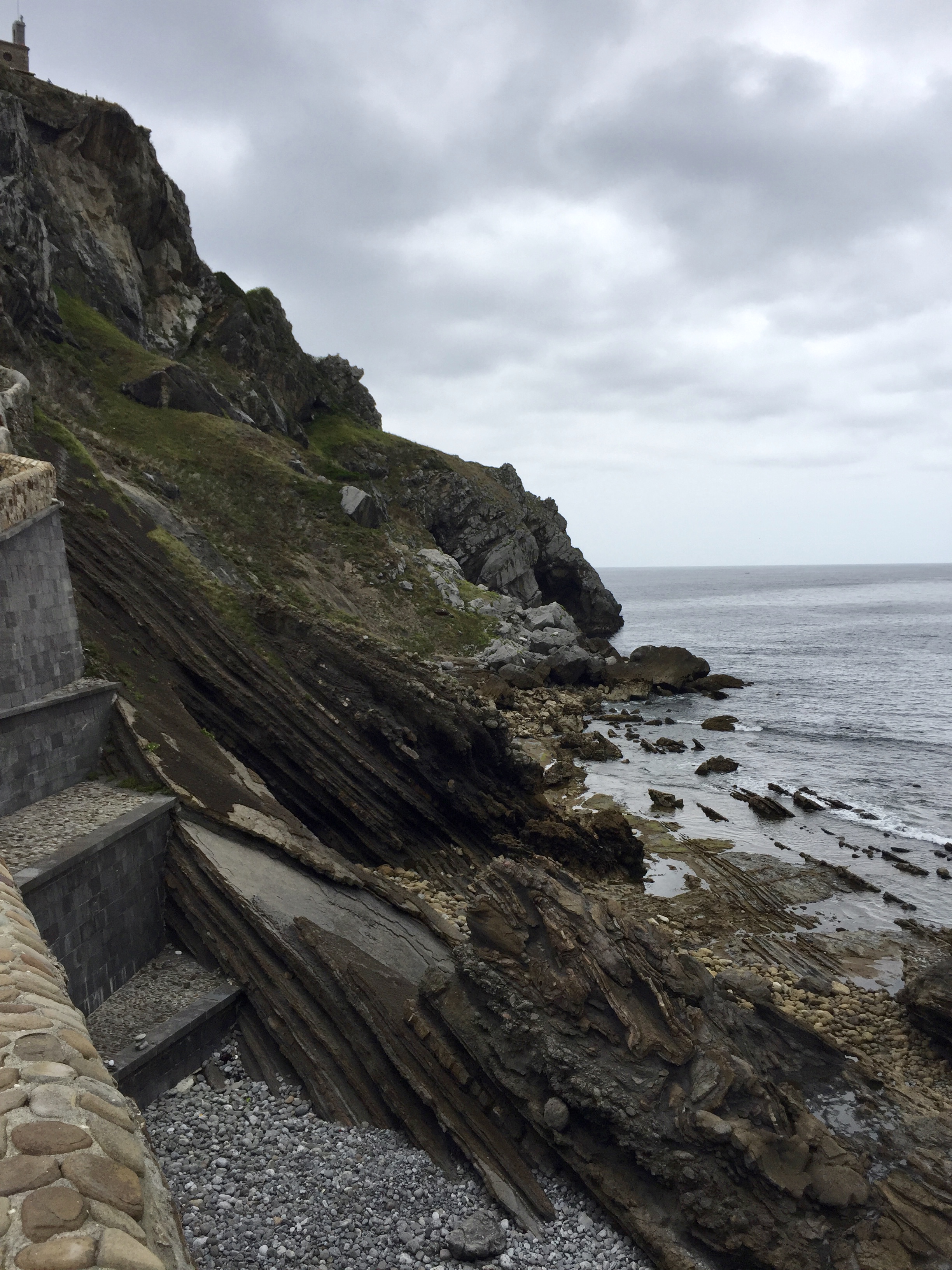
I recently took a trip to Basque country, visiting San Sebastian in Spain and Biarritz in France. Less than an hour’s drive lies between the two cities, even though they are in different countries. I thoroughly enjoyed the holiday – there is a magic to that stretch of coast and I felt very at home there, for some reason.

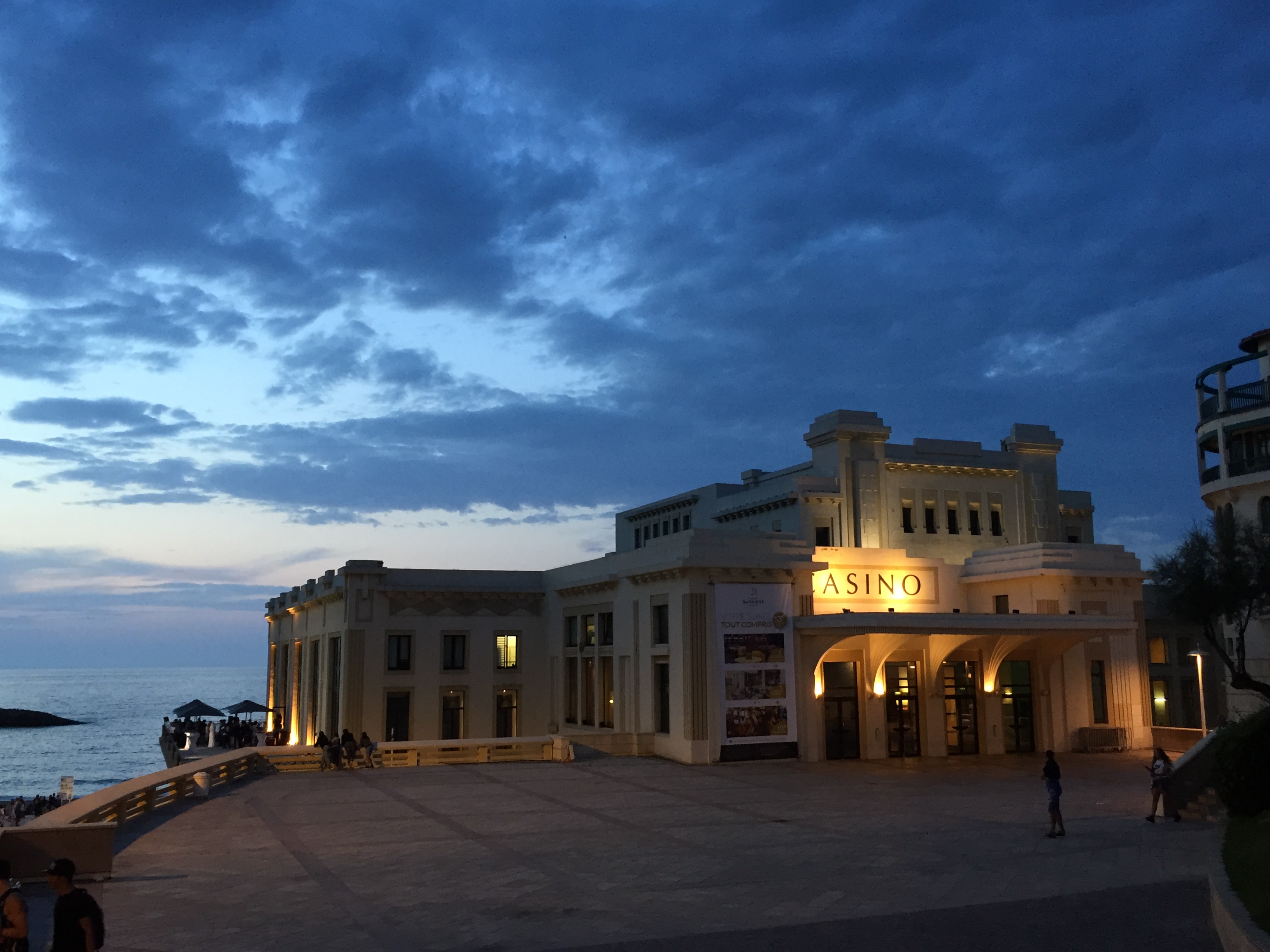
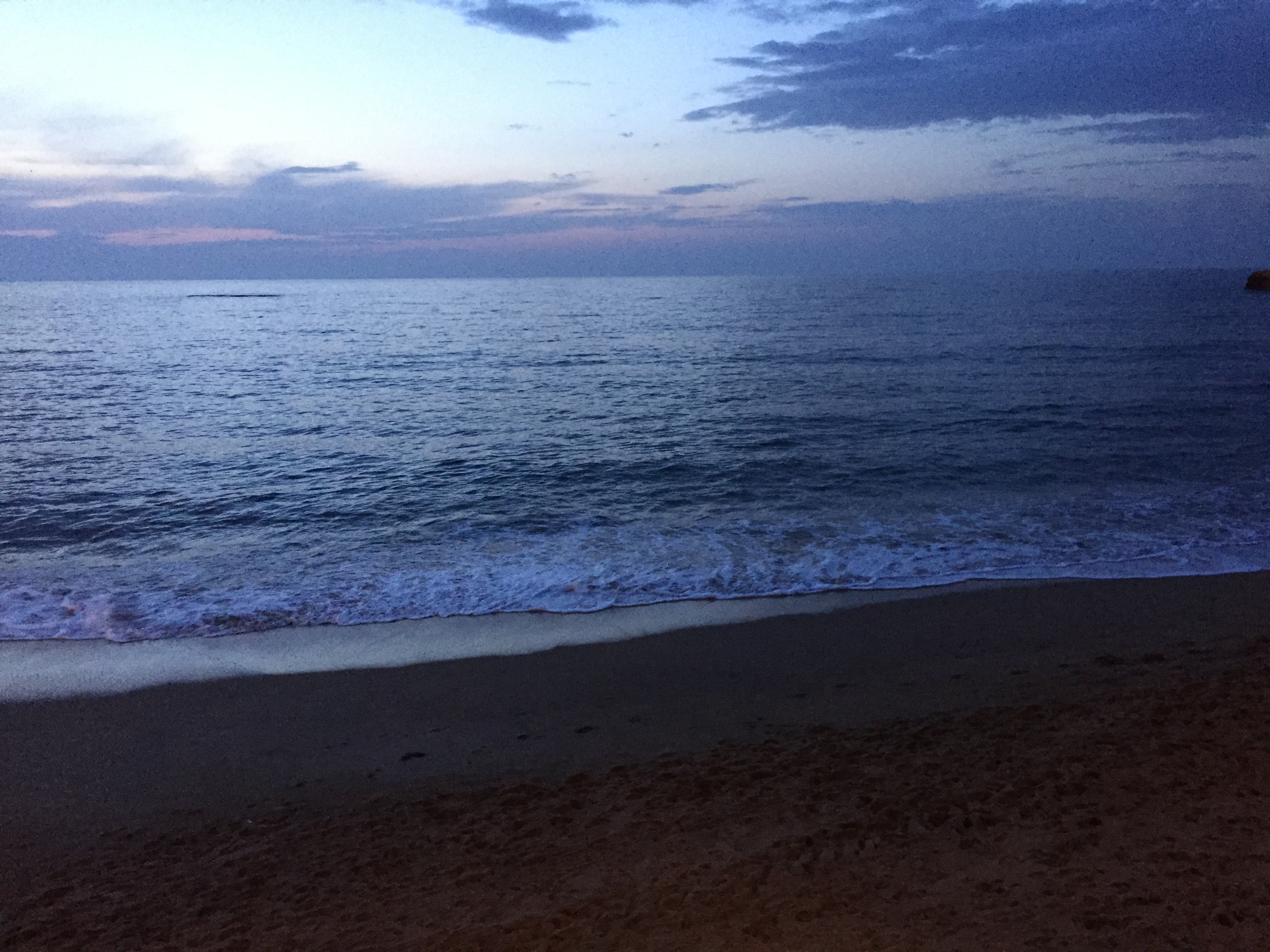
I saw a lot of different places while I was away, including two locations used for Dragonstone in Game of Thrones (I blogged about them here and here), so will be writing a few Wednesday Wanders about the various locales. This week, I’m wandering to Biarritz, and the beautiful main beach at dusk. We spent a lot of time walking along here, both day and night, as it was the direct route into the town centre. With the beautiful view, the combination of rocks and sea and sky coupled with Art Deco architecture, it was a pleasure every time.

One of the buildings along the seafront at Biarritz is the Casino. Built in the 1920s, it was opened only a few weeks before the Stock Market crash that marked the end of the glittering art Deco era. It is a beautiful reminder of that decadent time, nonetheless, and a survivor – plans to knock it down in the 90s were thankfully scuppered, and the building restored and designated a historical monument. Nowadays it contains a pool, restaurants and a casino, and was full of people every time we passed by.

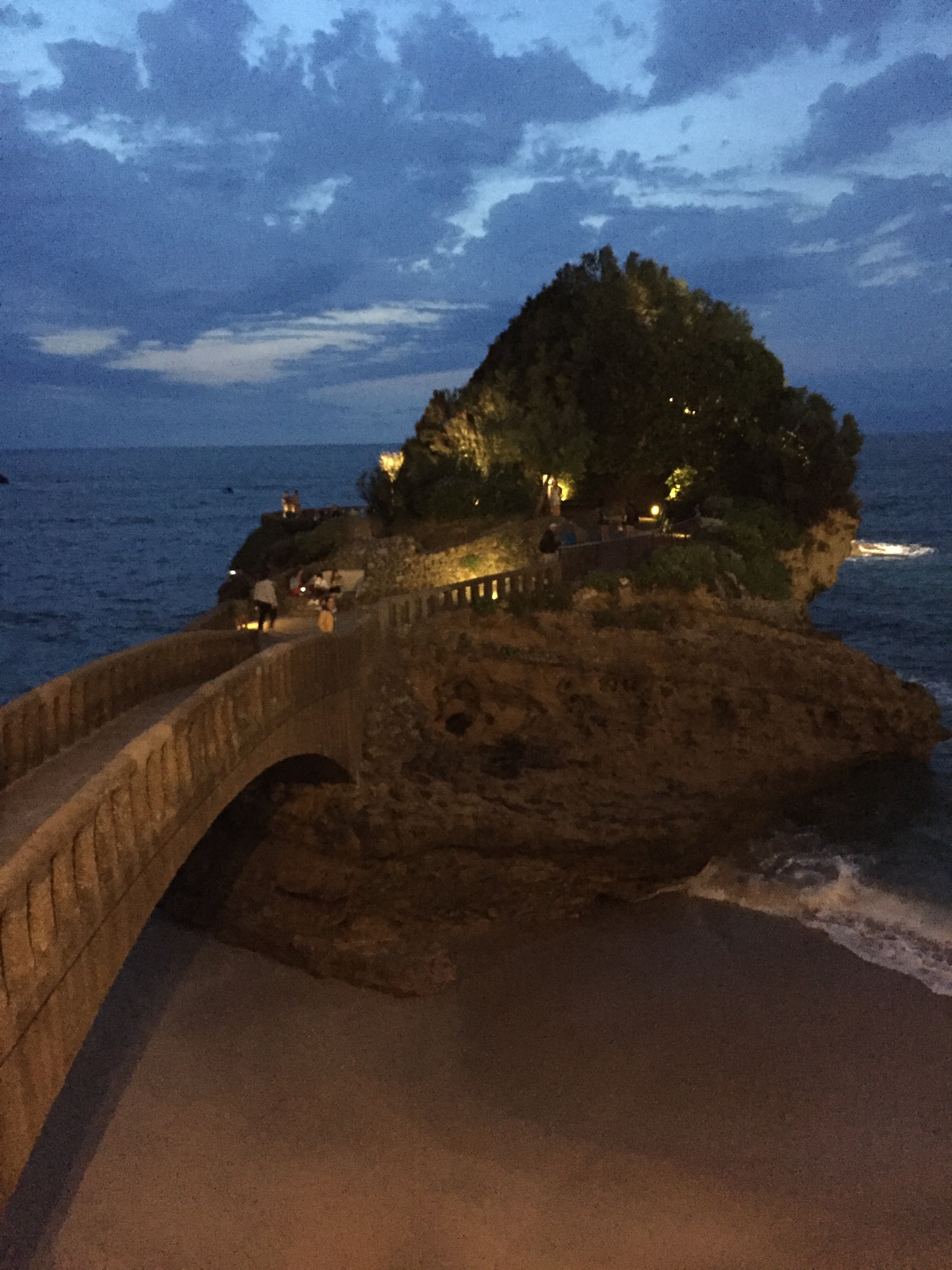
The walk along the beach also passes this lovely islet, connected by a stone bridge to the mainland. It seemed like something out of a fairy tale (so I loved it, obviously). There was also a lovely church, as well as the old fishing village, which I’ll write about in more detail soon.

But for now, let us look at the gold and violet sky, the shimmer of ocean against dark sand, the clean lines of the Art Deco building, the warm lights of the coastline against the dusk sky. It is a supremely romantic coastline, with a warmth in the air that filled me with joy.

I can’t wait to go back one day.

Thank you for coming on another Wednesday Wander with me – see you next time!


If you enjoyed this post and would like to read more, you can find me on Twitter @AuthorHelenJFacebook, Instagram and Pinterest. Plus my latest book release, A Thousand Rooms, is now available on Amazon. Visit my Amazon Author Page to see more.
Maiden Mother Crone, Part 4 – Imbalance

Sigh.

I should have expected this. On the last Silent Eye weekend I’d attended there had been a place that had shaken me, unexpectedly, making my breath shorten, my heart pound. And so it is, I suppose. On these weekends we are challenged as well as inspired, and beauty can hold darkness as well as light. Still, when you reach such a place it is always a shock.

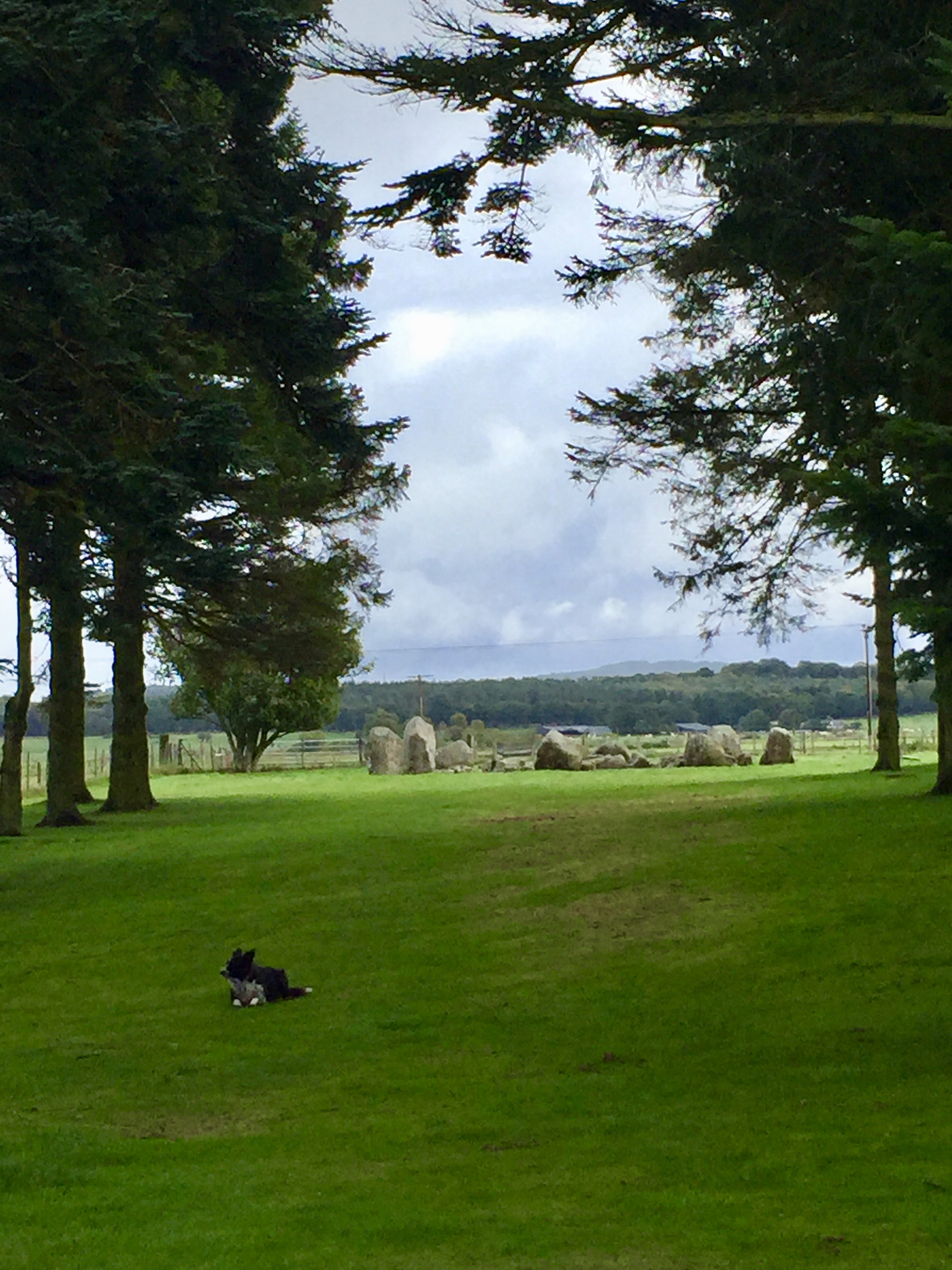
And so it was at Cullerlie. We parked by an old stone wall, and I picked a couple of blackberries to eat as we approached the gate leading to our next site. And then the guardian appeared. A bouncing ball of black and white fur, the collie seemed very pleased to see us all, bounding about on the grass, pausing at intervals on the approach to the circle. My companions (if you read their accounts), saw him as a friendly spirit, welcoming. And I felt the same way… for the most part. To me it felt a little bit as though he wasn’t sure whether or not we should be there, but he led us on nonetheless, pausing every so often to make sure we were following.

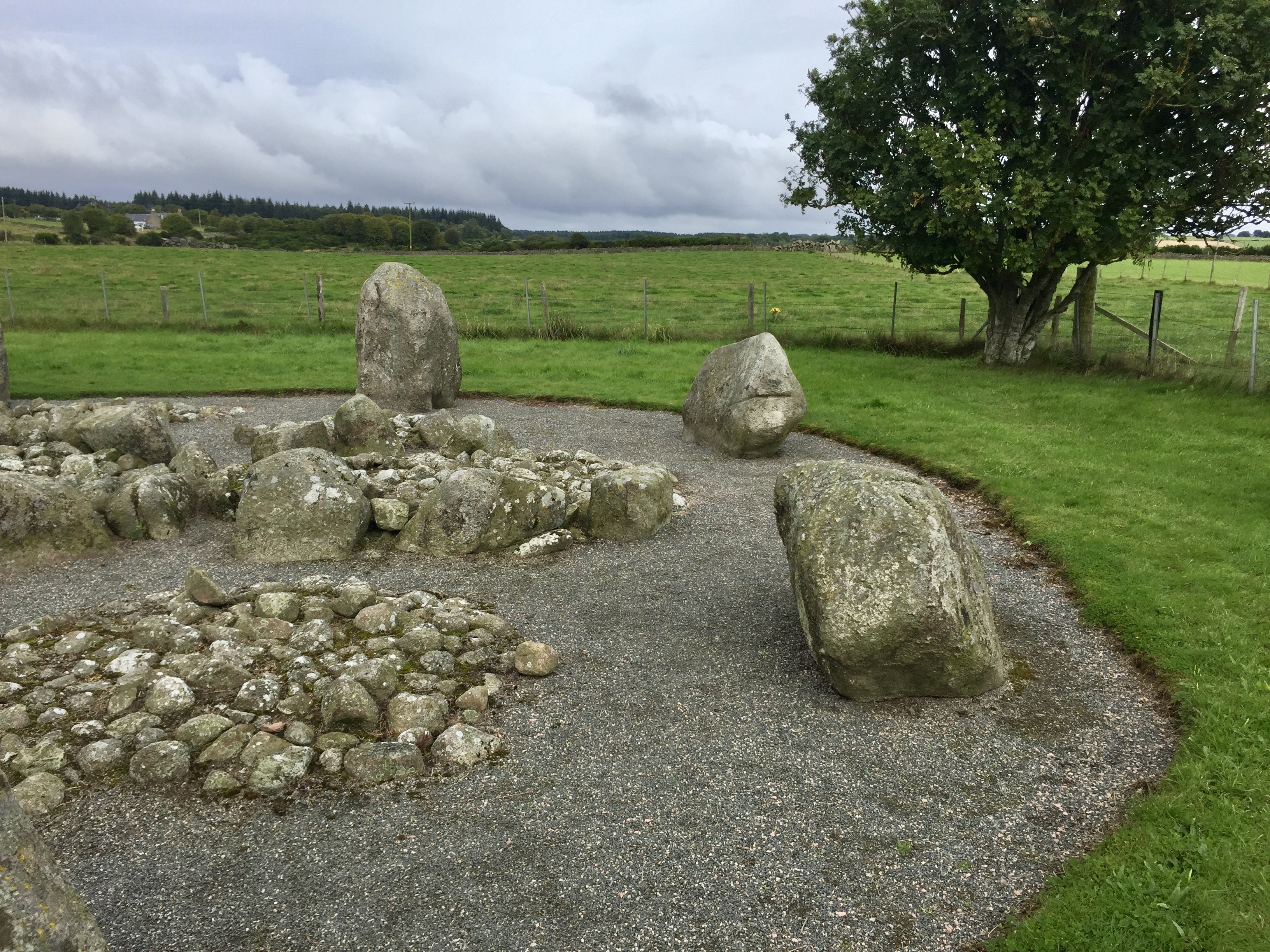
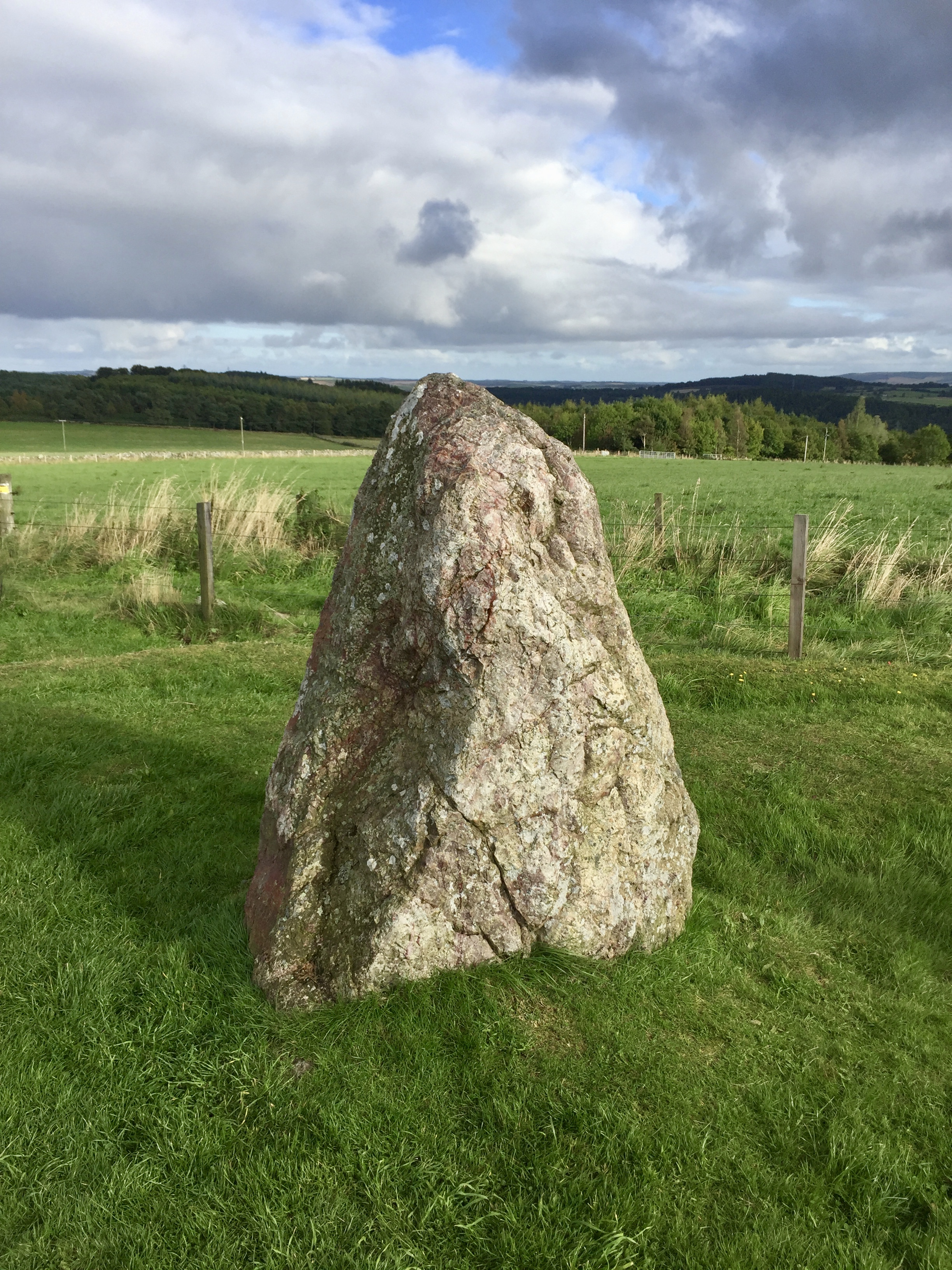
Cullerlie stone circle, also known as the Standing Stones of Echt, is described as a circle of red granite standing stones, surrounding eight small burial cairns. The cairns are also circular, and fill the interior of the circle. Hawthorn and willow ash have been found in the cairns, as well as cremated human bones placed there before smaller stones were placed over the top of them. When the circle was constructed in the Bronze Age, the landscape around it was boggy, the stones brought from higher ground to be placed there, in contrast to the other circles we had seen.

The approach to the circle was pretty enough, an avenue of tall trees on soft grass, fairy red toadstools dotting the green. But such toadstools hold poison, despite their beauty – perhaps a metaphor of what was to come. As I approached the circle I’d intended to touch the stones, to travel counter-clockwise and see where felt right, as I had at the other sites. But as I approached the circle it was almost as though I bounced off it, feeling gut-punched, my breath shallow and a pain in my solar plexus. Something, I didn’t know what, was wrong with this place.

‘…A woman, in long dress of green, crying out ‘It is wrong!” Repeatedly I heard her cries, repeatedly I saw her words ignored by the rest of the community who, seeking to emulate the power held in older sites, built this place, ignoring all but the most basic alignments, fragments of an almost forgotten past. A man of power, his face hard, turning from her, from her cries…’

This circle, our guide explained, was built about two millennia later than the ones we’d already visited. While there were some alignments in place, they were only to do with the passage of the sun – the moon had been ignored when the circle was built. The jumbles of stone in the centre felt muddy and convoluted, their placement simply wrong within the landscape. I didn’t want to touch the standing stones, nor set foot in the circle itself. And I was not alone – several of my other companions also expressed their distress and physical discomfort at the place, the feeling of ‘wrongness’.

Man and woman, sun and moon, light and dark, earth and sky. All necessary opposites on the great wheel of life, part of balance in all things. Perhaps that was what felt so off kilter about this place, the lack of balance, of care. I remarked that it felt like a Disney version of a stone circle, although at least at Disney World we know such things are done in play. Here there was still power, but it seemed broken in some way.

We did not stay long, in the end. Even those who were not initially put off didn’t want to linger, and so we made our way back up the avenue to the waiting cars. I did not look back.

This is the account of my recent weekend away with The Silent Eye in Scotland. Click here for Part 1, Part 2 and Part 3. ———————————————————————————————-

If you enjoyed this post and would like to read more, you can find me on Twitter @AuthorHelenJFacebook, Instagram and Pinterest. Plus my latest book release, A Thousand Rooms, is now available on Amazon. Visit my Amazon Author Page to see more.

Flash Fiction Prompt for Hurricane Relief #Flash4Storms

The lovely Sarah Brentyn over at Lemon Shark is running a Flash Fiction initiative to raise money for those affected by the recent hurricanes. Head over to her blog to see how you can help!

Sarah Brentyn's avatarLemon Shark

Harvey, Irma, Maria… These hurricanes have hit hard, leaving massive damage in their wakes. Here’s how you can help:

1. Write a piece of flash fiction in 50 words or less with the theme: Help 

(This can be any sort of assistance, support, encouragement, or a story of someone or something that needs help. You do not need to use the prompt word. Be creative! It can be 50 words, 15 words…even a six-word story. Anything goes provided it is prose up to 50 words. It doesn’t have to be sunshine and rainbows but keep it PG and friendly.)

2. Add a new post on your blog with your flash fiction and the hashtag #Flash4Storms in the title

3. Link to this post

4. Leave a comment here with a link to your post so I know you’ve participated

5. Help spread the word on social media with the hashtags:

View original post 183 more words

Maiden Mother Crone, Part 3 – Balance

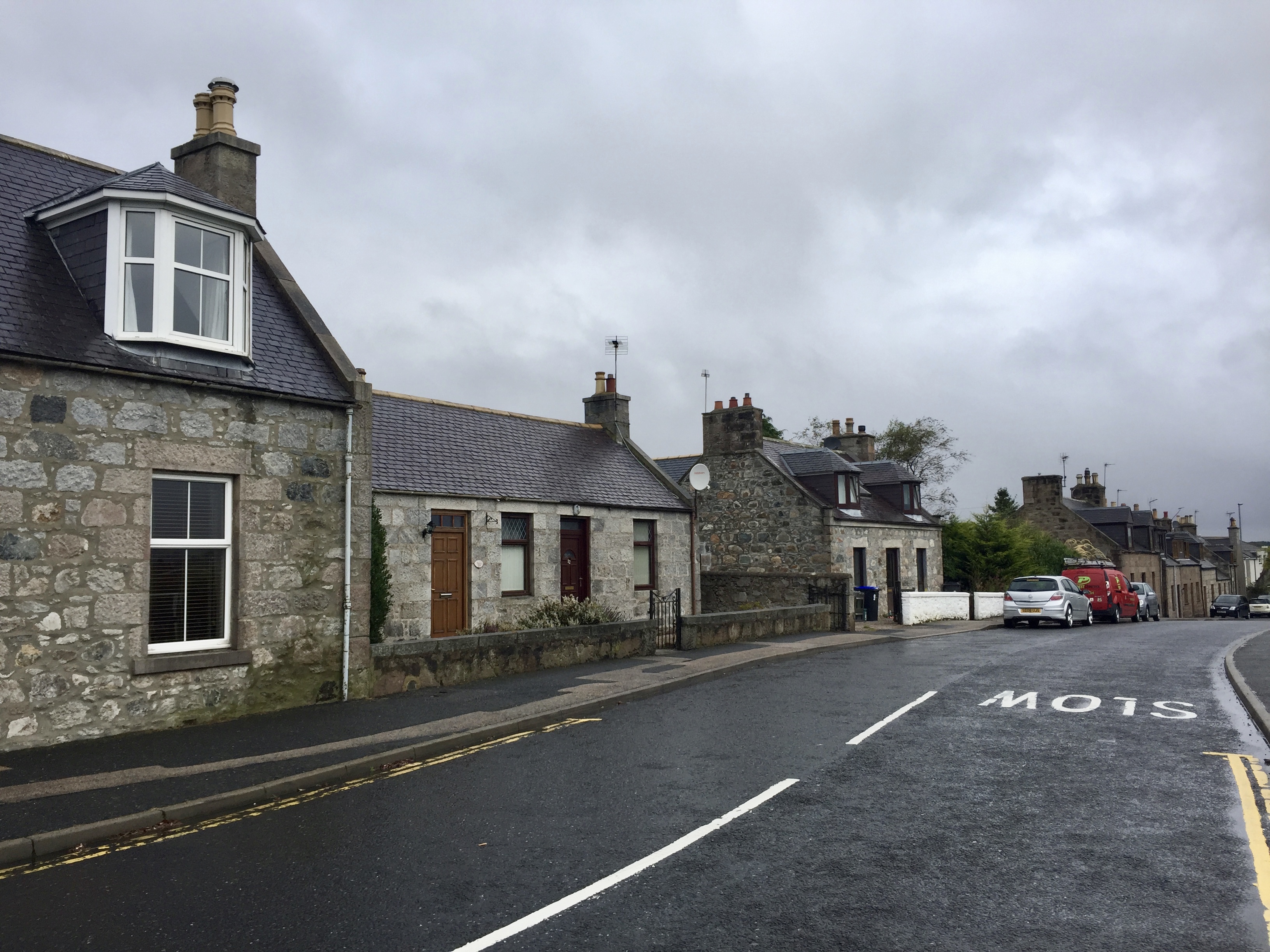
The next morning I woke early and went to breakfast – to find several of the group already there, including our guide. We hadn’t realised we were staying at the same place, so it was a nice surprise to catch up before the day began. The meeting place for the rest of the group was a short walk away, and I set out after breakfast, wandering past old stone houses and tall pines, glimpses of sunshine giving me hope the day wouldn’t be quite as wet as the previous evening. Nonetheless, I had worn my wet weather gear again. We had several sites to visit that day, and I wasn’t sure when we’d get back to the hotel.

When I think about the second day, the first stone circle we visited remains elusive, for some reason. I cannot quite grasp where we were or what we saw. Perhaps that’s because of what came after, at the place of the dead. Even though the locations of the rest of the weekend are clear, I had to look through my photos to remind myself where we were.

And now I remember. The church at Midmar.

When we arrived, pulling into the small car park, it was wet underfoot but not yet raining, green leaves reflected in puddles along the track that ran nearby. The church itself was charming, blue doors and window frames a bright contrast to the surrounding green and grey. And beyond, just peeping around the building, we could see what looked like part of a stone circle.

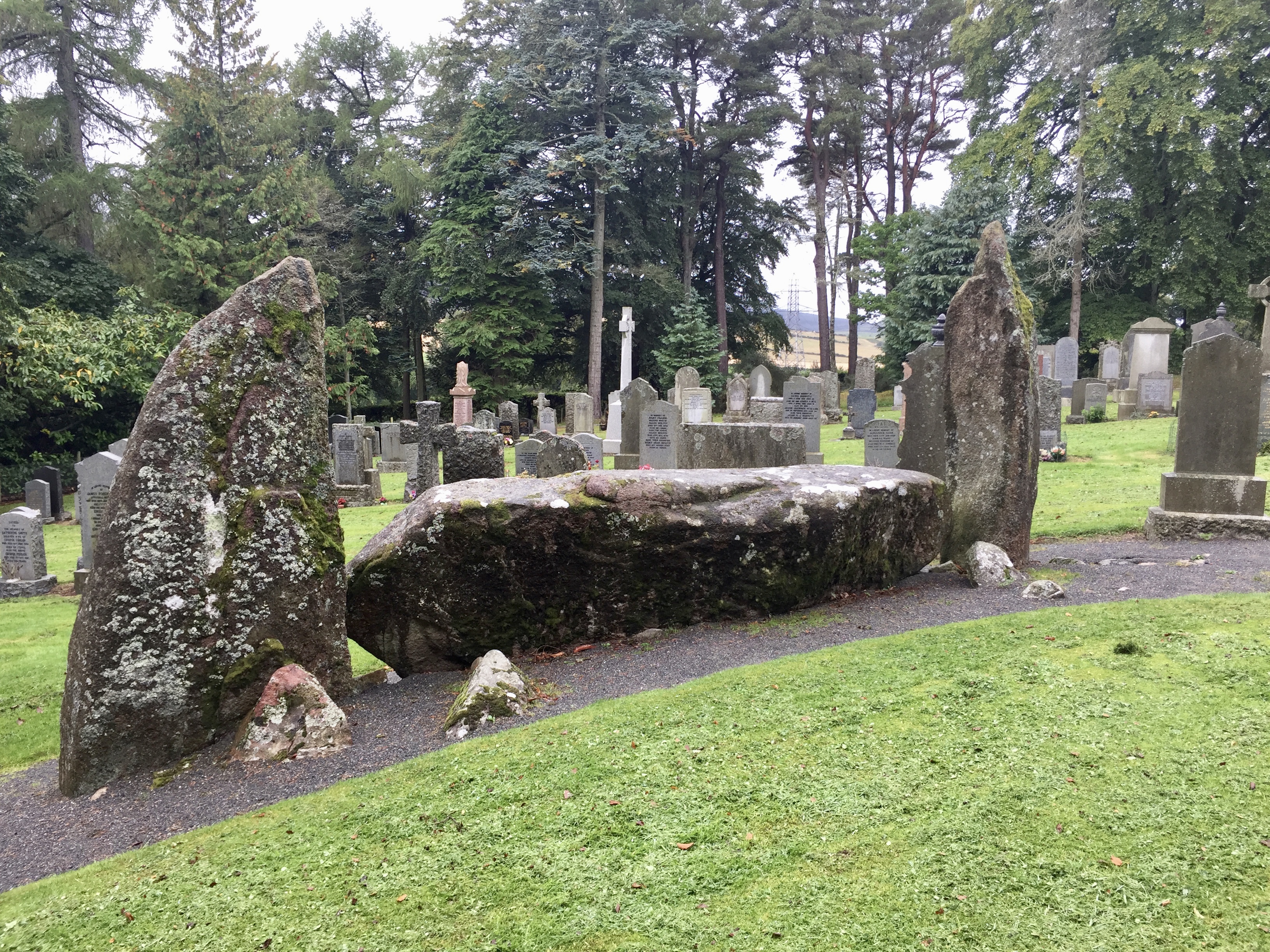
The church was built in the 19th century, perhaps deliberately in such a position so as to block the view from the stone circle to a nearby standing stone. The circle itself has been ‘tidied up’, as the sign put it, which meant removing one or two stones completely so hearses or wedding cars could be parked there, as well as replacing several other stones in positions not original to the site.

Despite these adjustments, the stones that remained still spoke, still held power and beauty. The great recumbent lay in place, flanked by its companion stones, their sharp smooth edges, so we were told by our guide, directing the eye to significant solar and lunar events, the circle aligned precisely with the movements of the sky. The church did not diminish their power –rather, there was a sense of unity there, of both temples cohabiting the same site, peaceful on their hillside.

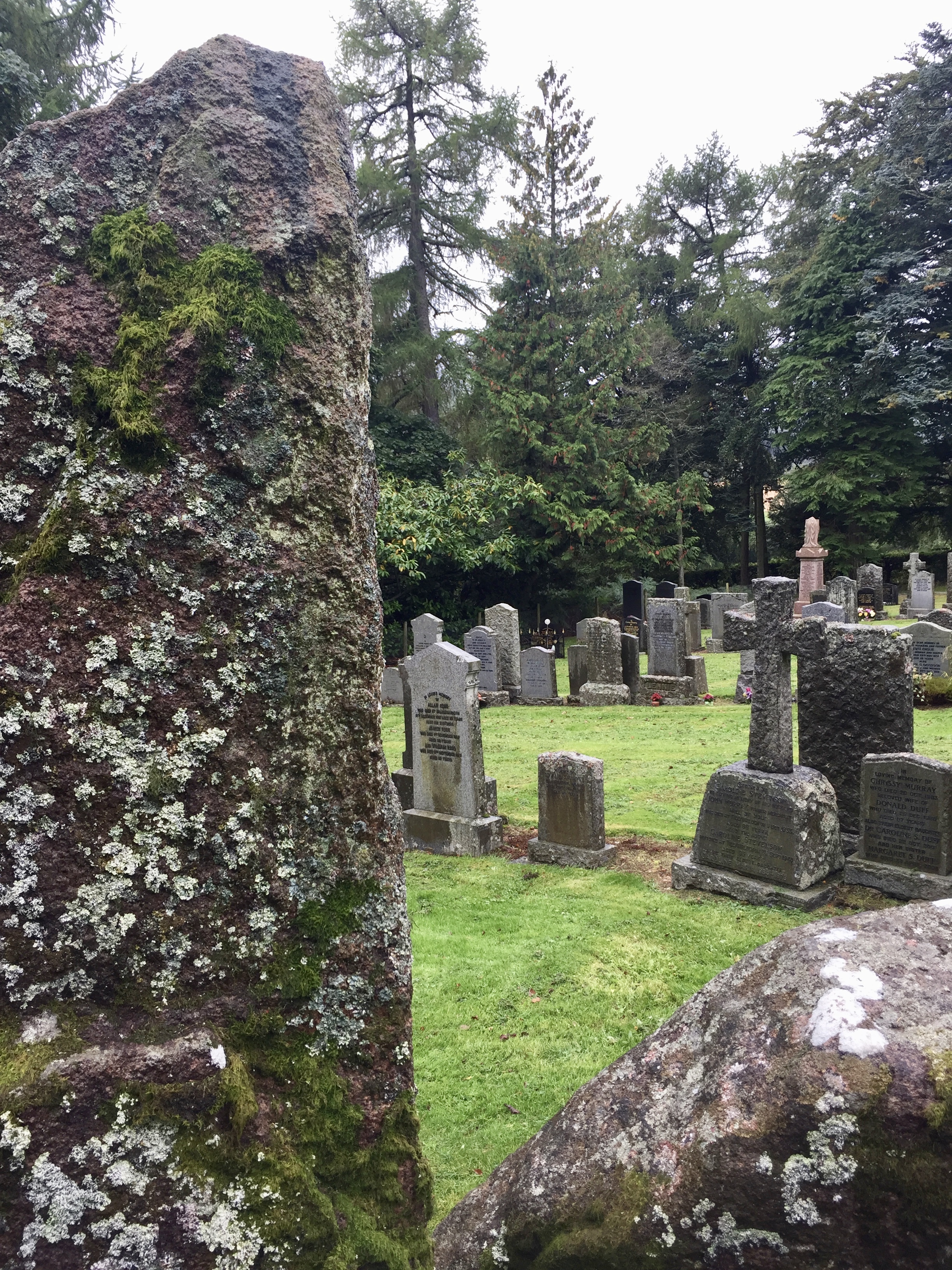
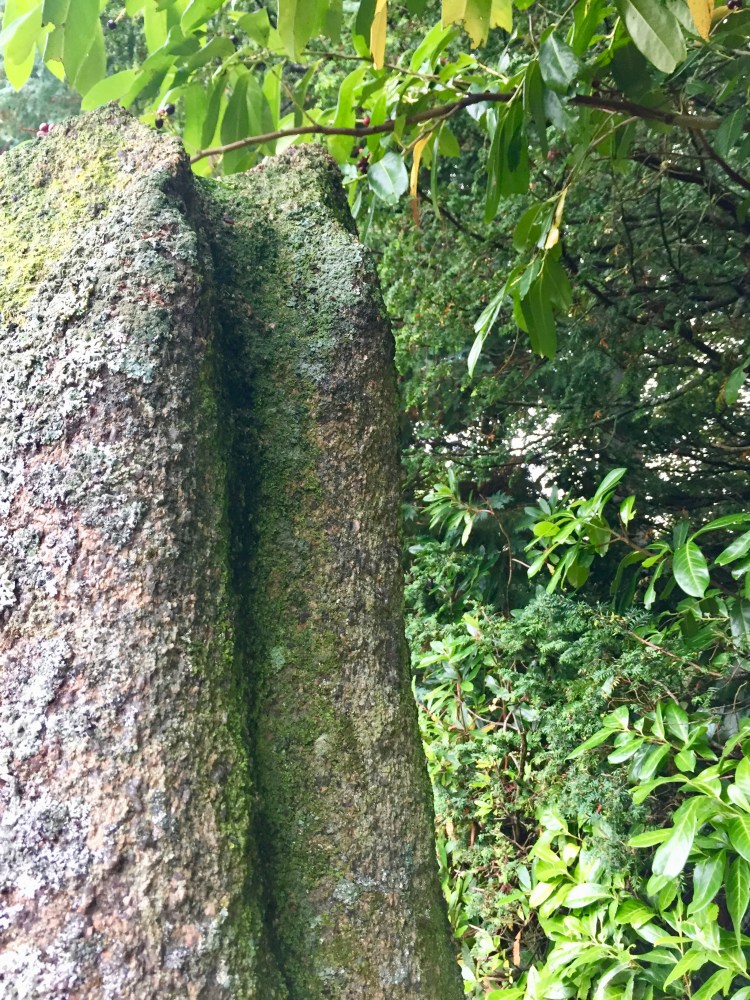
Once again we were invited to find a stone that ‘spoke’ to us, a place where we felt comfortable within the circle. One stone caught both me and another of the companions, inviting us to look closer, to photograph its moss strewn surface, unable, unwilling to leave its side, even when urged to join the rest of the group. It wasn’t until I took a small stone, blessed, from my pocket and bent down, burying it in the earth at the base of the stone, that it released us. As I stood up my companion, who hadn’t been able to see what I was doing, said, ‘Shall we go?’

It was raining, of course, the weather that seemed to follow us from site to site returning, though with none of the wildness of the previous evening. We wandered through the graveyard afterwards, all of us stopping to admire the gravestone of a local artist, decorated with a beautiful tree-of-life sculpture (for more information about this grave, head over to Sue’s account of the day, and the comments by Running Elk).

Before we left, I went to the old tumbled stone wall and, through a space in the trees, took in the beautiful view. Like Easter Aquhorthies, this circle was built almost at the top of a rise – almost, but not quite – for a lovely sense of harmony with the land.

There was a peace to this place, a feel of tree and stone and endless time, even with the more modern church nearby. It felt in balance, as though all things were well. This was in contrast to our next destination…

———————————————————————————————-

If you enjoyed this post and would like to read more, you can find me on Twitter @AuthorHelenJFacebook, Instagram and Pinterest. Plus my latest book release, A Thousand Rooms, is now available on Amazon. Visit my Amazon Author Page to see more.